

Application Detail
Wind Towers
Plate rolling solutions for wind tower shell and cone production
Plate rolling solutions for wind tower shell and cone production
EZHONG supplies CNC plate rolling machines for wind tower tubular sections and cones, with published heavy models around 260 mm thickness and 4200 mm width class for energy fabricators.
Industry challenges
Wind tower manufacturers need repeatable rolling of thick plate into cylindrical and conical shells with controlled ovality, short cycle times, and reliable cone forming for tapered sections.
Forming process steps
- Confirm plate thickness, width, material yield strength, and finished diameter or cone angle.
- Pre-bend plate ends where required for weld gap quality.
- Roll the cylinder or cone with CNC position control and multi-pass strategy.
- Check roundness/straightness and prepare for longitudinal welding and assembly.
Recommended EZHONG equipment
Primary recommendation: Wind Tower Bending Machine and related CNC 3-roll plate bending machines. For high pre-bend productivity, also evaluate 4-roll plate bending machines.
Typical parameter ranges
Typical published examples (confirm per material): synchronization accuracy about ±0.2 mm; heavy example capacity about 260 mm thickness × 4200 mm width; upper-roll force in the multi-thousand-ton class on heavy wind-tower models.
Related project evidence
Review wind-tower project references under Cases, including heavy plate rolling deliveries for tower manufacturing lines. Contact engineering for model matching to your tower class.
What machine is used for wind tower shell rolling?
Most wind tower shells are rolled on heavy CNC 3-roll variable-geometry plate rolling machines. EZHONG publishes wind-tower-focused models with computer-leveled upper-roll lift and independent lower-roll center-distance adjustment.
Can EZHONG roll conical tower sections?
Yes. Cone rolling is supported via lower-roll geometry adjustment and cone-stopper arrangements; general cone angles around 30° at reduced load are commonly referenced on manufacturer pages—confirm for your drawing.
What data is needed for a wind tower rolling quotation?
Provide plate thickness/width ranges, steel grade or yield strength, shell diameters, cone requirements, annual volume, and any FAT/export constraints. See Contact.
Recommended Equipment
Published models associated with this application context.
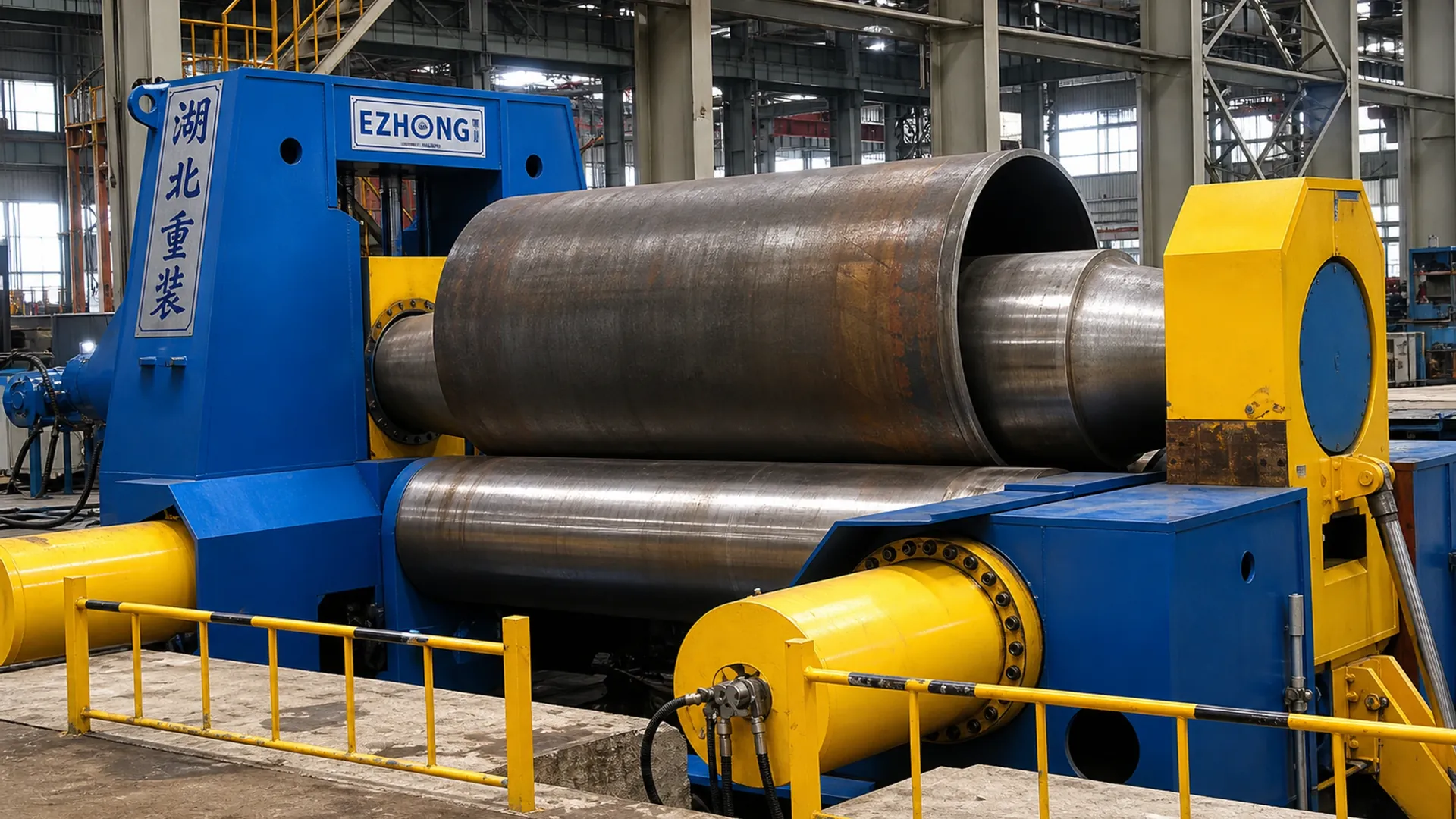
3 Rolls Plate Bending Machine
EZHONG CNC 3-roll plate bending machines form heavy steel plate into cylinders and cones for wind towers, pressure vessels, shipbuilding, and steel fabrication. Upper-roll hydraulic lift with computer leveling delivers about ±0.2 mm synchronization accuracy across the XW11S series.
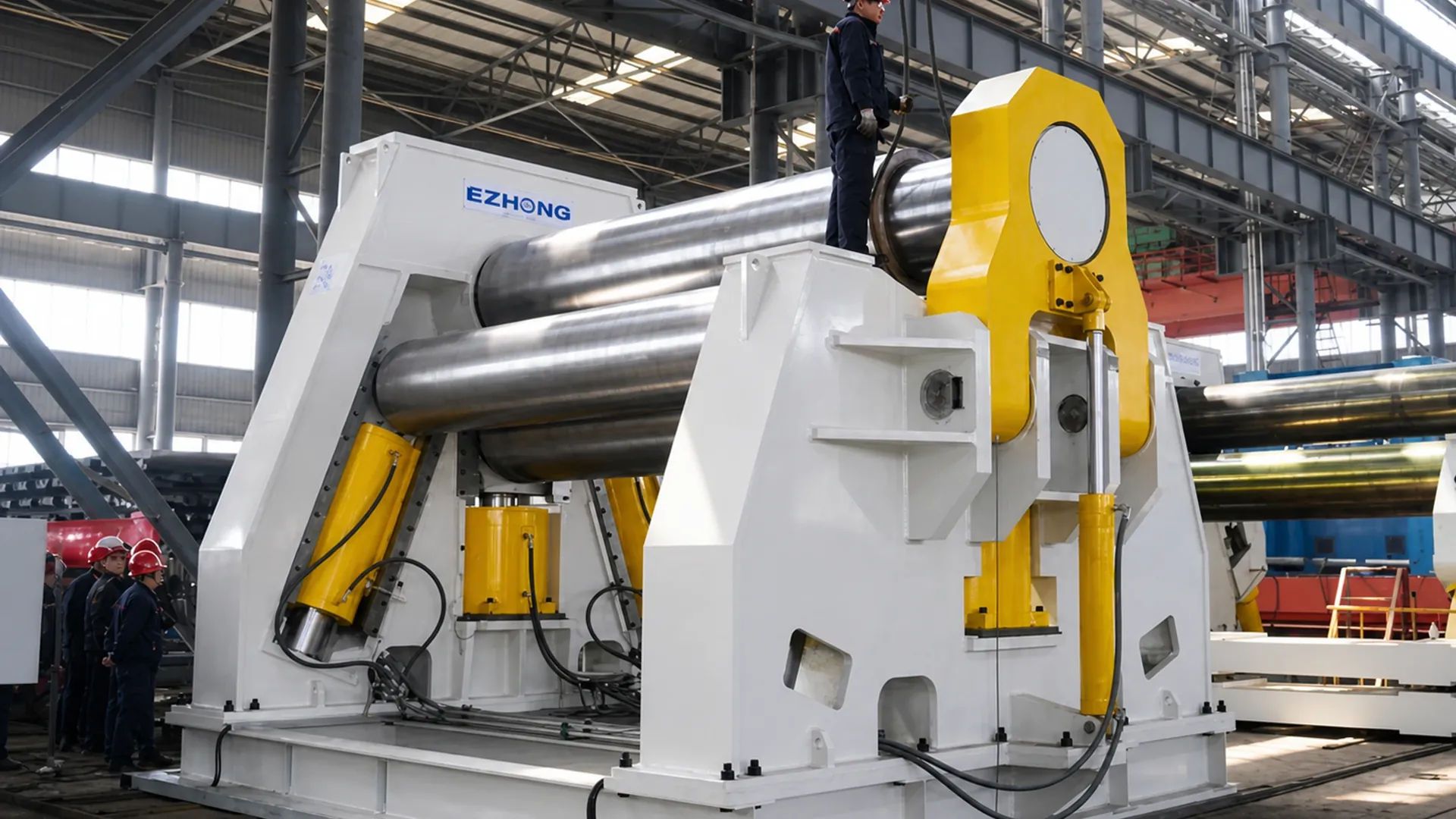
4 Rolls Plate Bending Machine
EZHONG CNC four-roll plate bending machines pre-bend plate ends and roll cylinders or cones in fewer steps. Published models cover roughly 20–120 mm thickness and 2000–4200 mm useful length, with spherical roller bearings on each work roll.
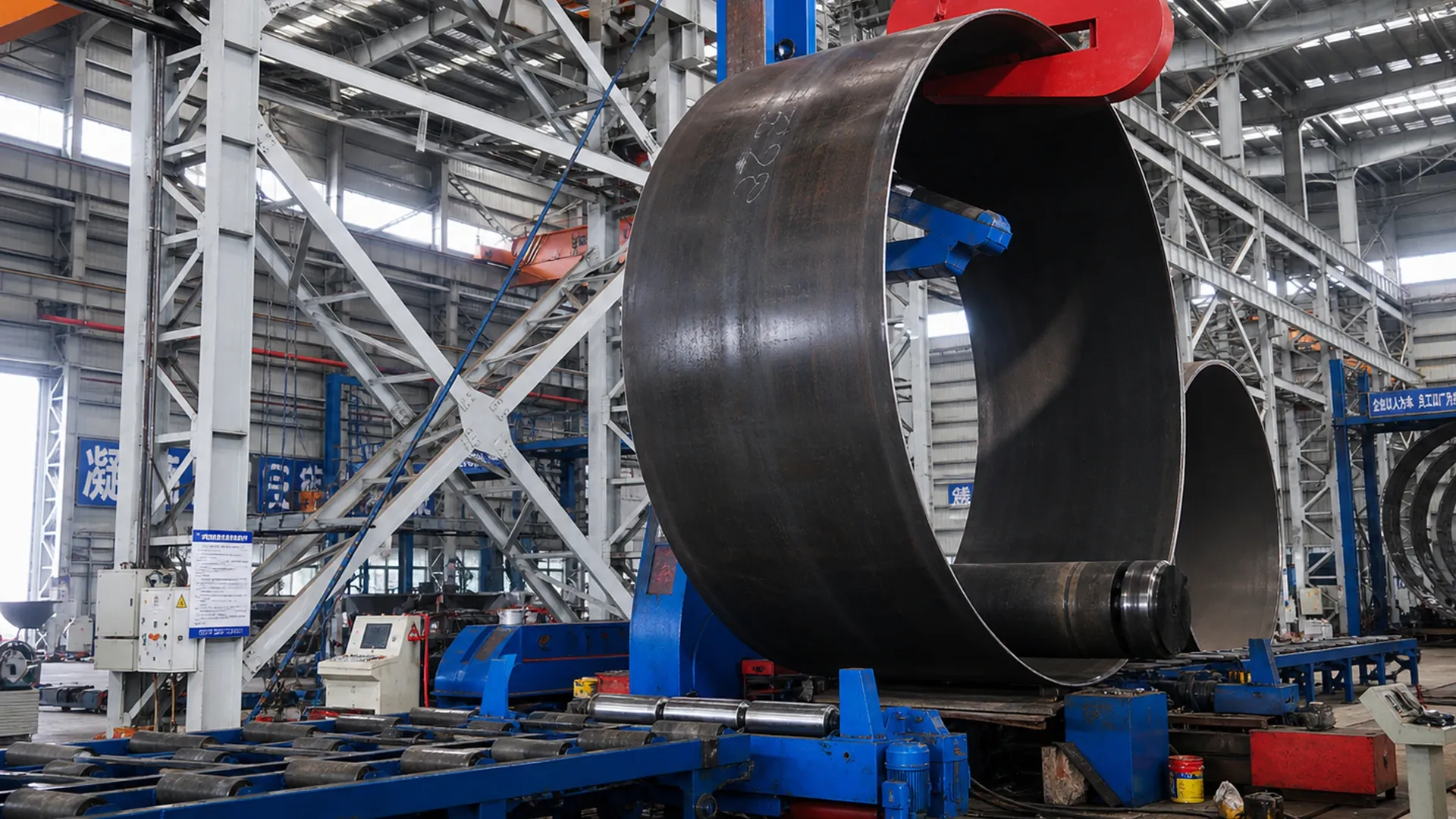
Wind Tower Bending Machine
EZHONG wind tower bending machines are CNC variable-geometry three-roll systems for tower shells and cones. Computer-leveled upper-roll lift holds about ±0.2 mm synchronization accuracy for high-duty energy projects.